
Sleep and injury recovery
We know that sleep is important to improve performance and reduce risk of injury, but what about the relationship between sleep and recovery?
Understanding different stages of sleep
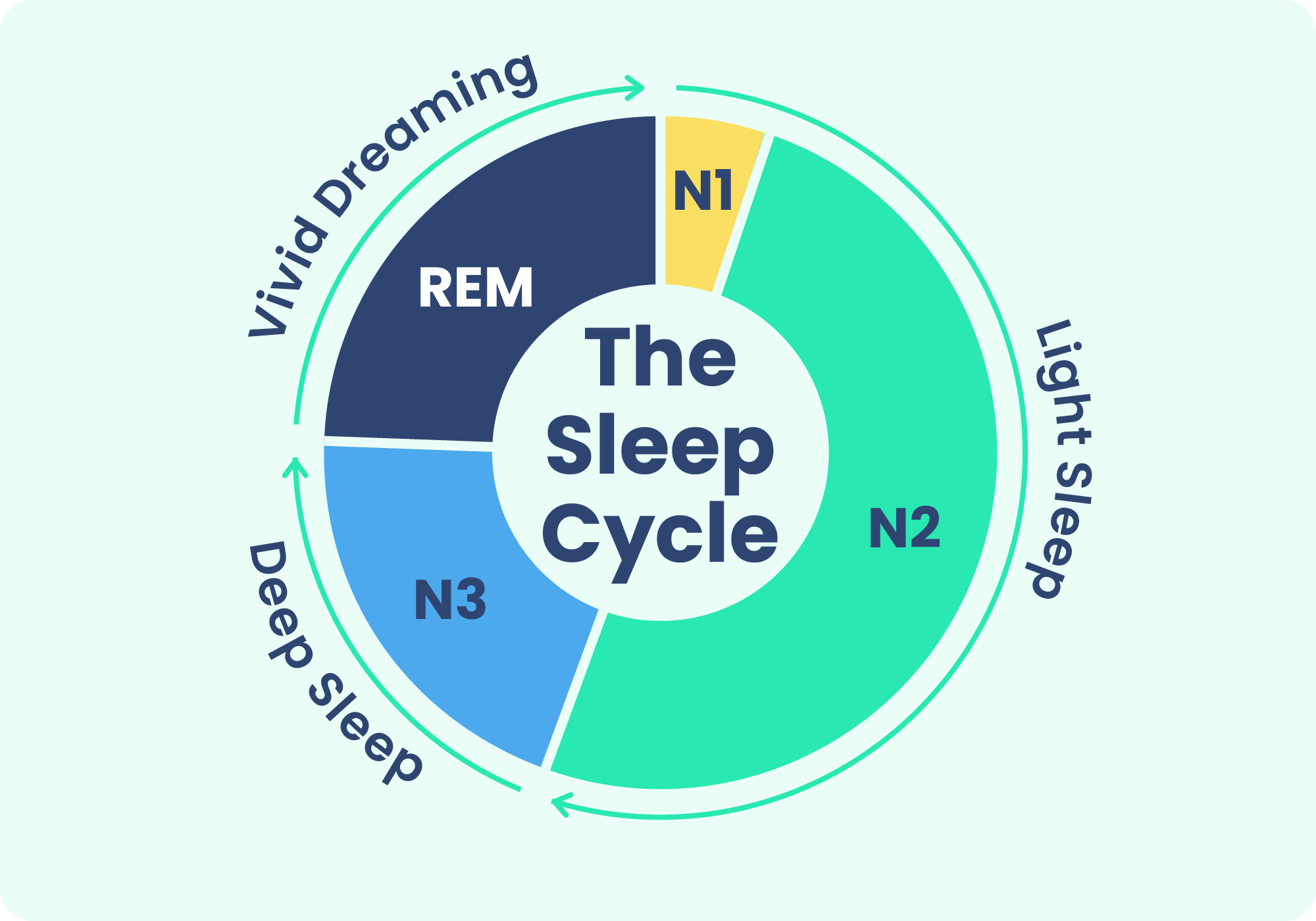
First, we need to understand briefly what constitute a sleep cycle, and what happened during it.
In the day, stress hormone (cortisol) builds up in the body, and it breaks down tissues in the body for energy.
At night, as we sleep, the body get rid of the waste products accumulated in the body system and to recharge the energy depleted through the day.
The level of cortisol is reduced, and it is also the time where growth hormones are released to help body to grow and recovery from injuries.
So, by sleeping, we effectively lower cortisol levels, allowing growth hormones to rebuild injured tissues more effectively.
Sleep can be divided into 2 parts: Non-Rapid Eye Movement (REM) sleep (which further divides into 3 stages), and REM sleep.
Light sleep (stages 1 &2): This is the stage where we spent most of our sleeping hours on (~50%).
This is the time where our memory consolidates, specifically procedural and declarative memory.
Deep sleep (stage 3): This is the stage that is critical to restorative sleep as this is when the body repairs and regrows tissues, builds bone and muscle, and strengthens the immune system.
REM sleep: This is the stage when dreams happen, not considered restful sleep. It is associated with dreaming & irregular muscle movements,
and people tend to awake spontaneously during REM sleep.
Sleep and injury risk
One study conducted on lab rats concluded that DNA damage in totally sleep deprived rats was 139% of control values,
and two days of recovery sleep restored the balance between DNA damage and repair, and resulted in normal or below-normal metabolic burdens and oxidative damage.
Another study shows that reduced sleep (<8h) is related with 1.7 more risk of having an injury in younger athletes and a negative effect on recovery after training; 65% of athletes who got less than 8 hours of sleep were more injury-prone than the 31% of athletes who reported they got more than 8 hours per night.
This shows that sleep deprivation can affect motor function, mood, and cognitive functions, all of which could affect a performance and injury risk.
Food for thought
During our rehab journey, we had been told to keep as active as we are able to, instead of stopping our activities completely.
As studies had proven that sleep is crucial in injury prevention and healing, it is essential that we keep in mind to get enough quality sleep to help in our road to recovery!
—
Do keep an eye out for our next post on how to get a good night sleep in 3/4/5 steps!
References
- Patel AK, Reddy V, Shumway KR, et al. Physiology, Sleep Stages. [Updated 2024 Jan 26]. In: StatPearls [Internet]. Treasure Island (FL): StatPearls Publishing; 2024 Jan-. Available from: https://www.ncbi.nlm.nih.gov/books/NBK526132/
- Milewski MD, Skaggs DL, Bishop GA, Pace JL, Ibrahim DA, Wren TA, Barzdukas A. Chronic lack of sleep is associated with increased sports injuries in adolescent athletes. J Pediatr Orthop. 2014 Mar;34(2):129-33. doi: 10.1097/BPO.0000000000000151. PMID: 25028798.
- Carol A. Everson, Christopher J. Henchen, Aniko Szabo, Neil Hogg, Cell Injury and Repair Resulting from Sleep Loss and Sleep Recovery in Laboratory Rats, Sleep, Volume 37, Issue 12, 1 December 2014, Pages 1929–1940, https://doi.org/10.5665/sleep.4244